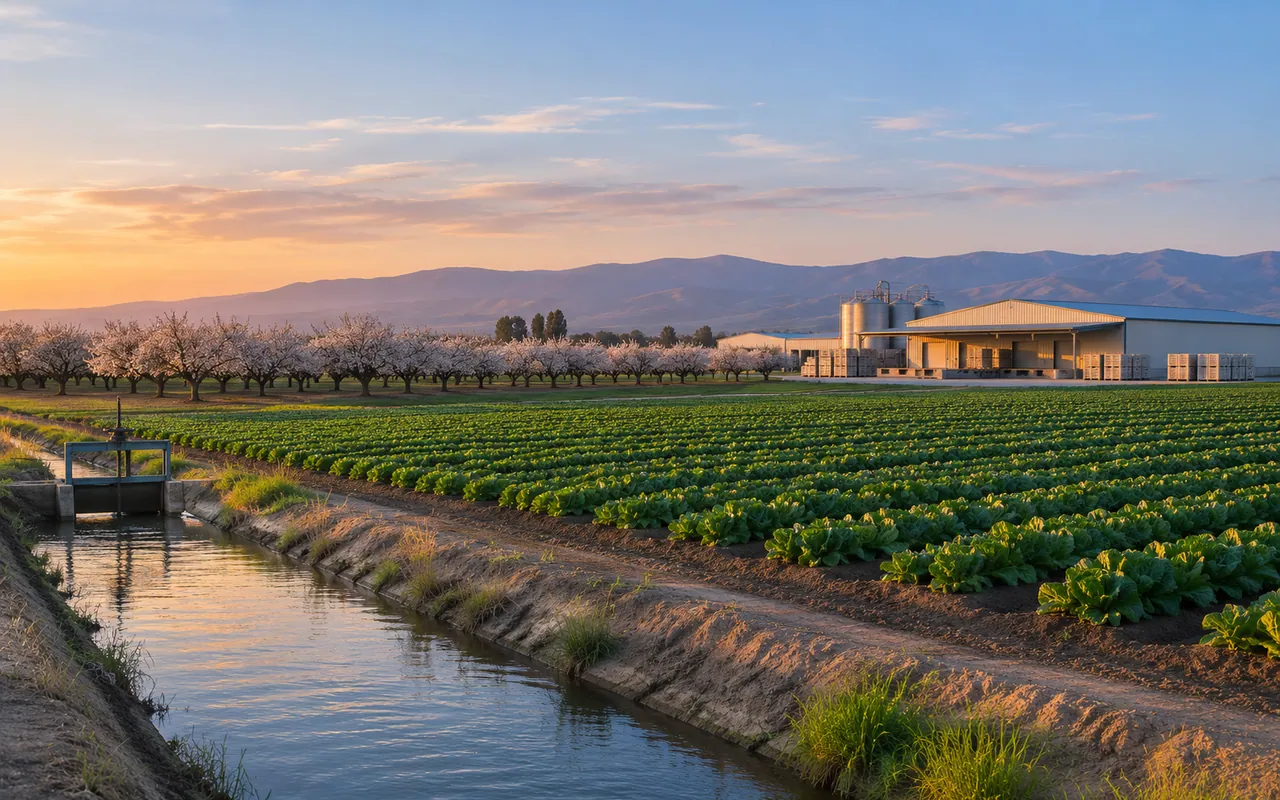
Food and agriculture are steady in one sense and unpredictable in another. People eat in every economy. A single season, a price swing or the loss of one customer can still change a company’s year.
Investors, lenders and buyers in the sector know this. Their questions are less about whether demand exists and more about how the company handles what it cannot control.
Four subjects come up in nearly every conversation.
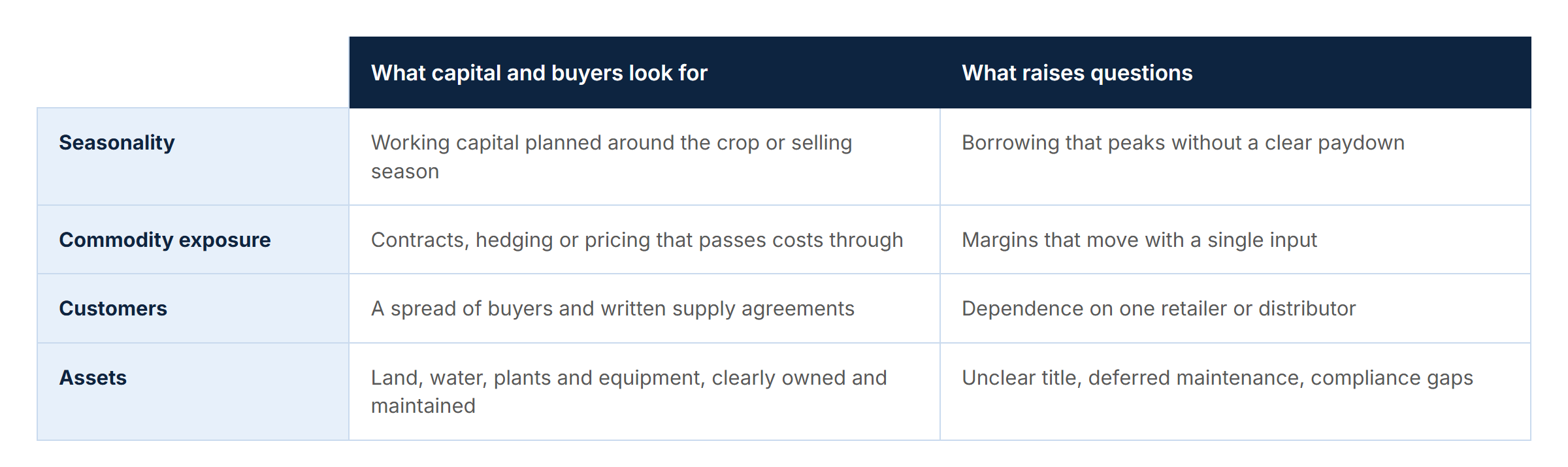
Seasonality
Many food and agricultural businesses spend for months before they are paid. Growers fund a crop until harvest. Processors buy and pack in a short window and sell through the year.
That shapes the company’s need for working capital, which rises and falls with the season.
Capital providers want to see that the cycle is understood and planned for. A credit line that is drawn in season and paid down afterward reassures them. One that never comes down suggests it is funding something other than the season.
Results should be read over a full year, and preferably several. A strong quarter means little on its own.
Commodity exposure
The price of what the company buys or grows may move sharply, and the company may not be able to pass the change on to its customers.
Providers ask where that risk sits. Does the company sell at fixed prices while buying at market prices? Does it have contracts, hedges or pricing terms that move with its costs?
They do not expect the risk to be removed. They expect it to be known and managed, and they look at how margins held up in years when prices moved against the company.
In this sector, a good year proves less than a bad year handled well.
Customers and channels
Food companies often sell much of their volume to a few large retailers, distributors or food service groups. Those customers have bargaining power and can change suppliers.
Providers look at how much of revenue depends on the largest few, how long the relationships have lasted and whether supply agreements are in writing.
They also ask what sets the company apart: a brand consumers ask for, a certification, a process or reliability that is hard to replace. A supplier of an undifferentiated product competes on price alone.
Assets and compliance
The sector is rich in physical assets: land, water, orchards, plants, cold storage and equipment. These can support borrowing and can hold value apart from the business.
Providers check that they are owned clearly, maintained and insured. In agriculture, access to water can matter as much as the land.
Food safety and regulatory compliance are examined closely. A recall or a failed inspection can damage a company quickly, so records, certifications and procedures carry real weight in diligence.
Who invests and who buys
The field is varied. Banks and specialized agricultural lenders provide much of the debt, often secured by land and crops. Private equity funds with a food focus invest in processors, brands and distributors.
Strategic buyers are active: larger food companies seeking brands, capacity or supply. Family offices and long-term investors are drawn to farmland and to businesses with steady demand.
Each values the company differently. A lender looks to assets and cash flow. A strategic buyer looks to what the company adds to its own.
Preparing
A company that expects to raise capital or sell can prepare in three ways. Present results across several years, with the causes of good and bad seasons explained. Put key customer and supply relationships in writing. Bring compliance records and asset documentation up to date.
Capital does not ask a food business to control the weather or the market. It asks how the business performs when they turn.
Your next step
Chart the company’s working capital month by month for the last three years, beside its margins. If the pattern is clear and repeats, it can be explained to a lender or investor. If it is not, find out why before they ask.
The next piece in this series covers infrastructure and energy.
This article is general information. It is not investment, legal or tax advice, and it is not an offer to buy or sell any security.
Securities are offered through GT Securities, Inc. | Member FINRA, SIPC