
The letter of intent arrives, and everyone looks at one number. It is the purchase price, and it is larger than the owner expected.
The number is real, and it is incomplete. The same letter contains terms that decide how much of the price is paid, when it is paid and how much can be taken back.
The letter also marks the point at which the seller’s position is strongest. Once it is signed and exclusivity begins, the other buyers are gone. What the letter leaves open is negotiated later from a weaker seat.
What a letter of intent is
A letter of intent summarizes the main terms of a sale. Most of it is not binding. The parts that usually are binding cover exclusivity, confidentiality and each side’s costs.
The non-binding terms still carry weight. They set expectations, and a party that tries to change them later needs a reason.
Detail favors the seller. A vague letter moves the hard questions to a time when competition has ended.
Structure: what is being bought
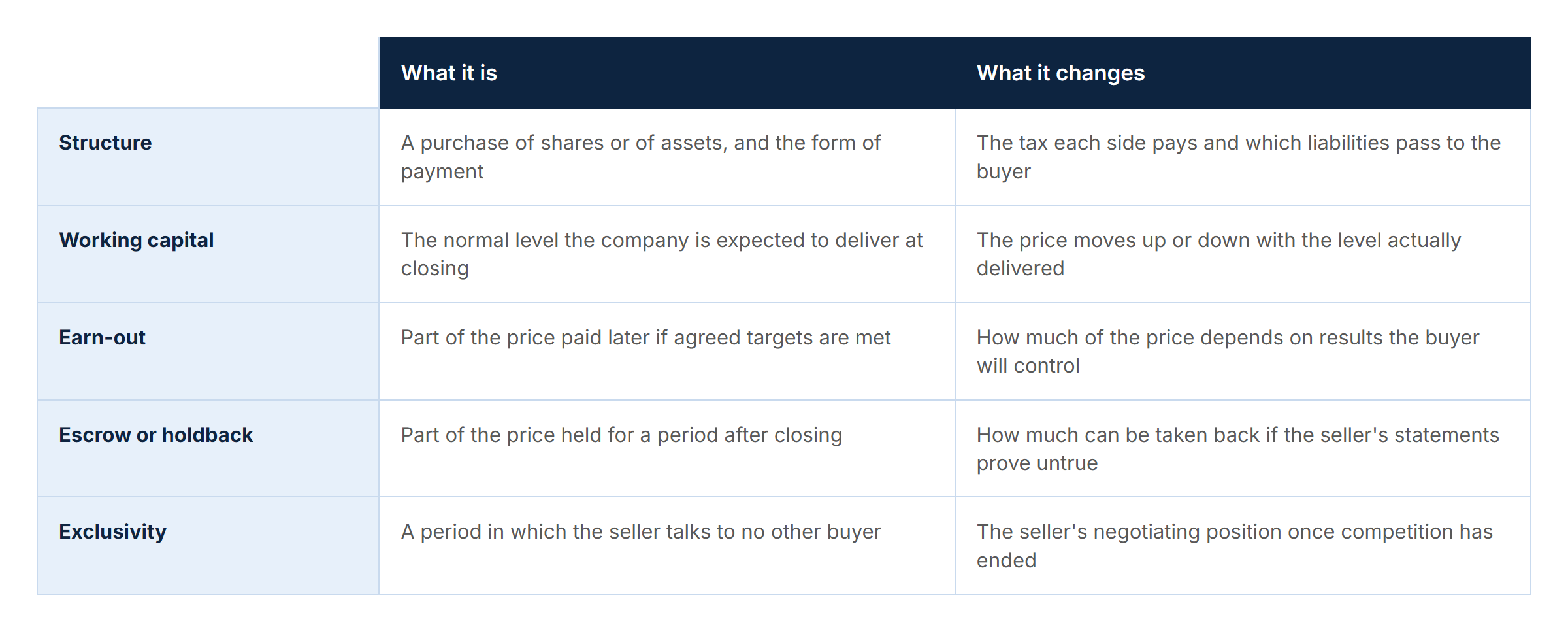
A buyer can purchase the company’s shares or its assets. The choice affects the taxes each side pays and which liabilities pass to the buyer.
Two offers at the same price can leave the owner with different amounts after tax. A tax adviser should review the structure before the letter is signed, not after.
The form of payment belongs here too: cash, the buyer’s shares, a note from the buyer or a stake kept in the company.
Working capital: the adjustment few owners expect
The price usually assumes the company is delivered with a normal level of working capital. If the level at closing is lower, the price is reduced. If it is higher, the price is increased.
How “normal” is defined can move a meaningful amount of money. The method belongs in the letter.
Many offers are also made on a cash-free, debt-free basis. The seller keeps the cash and repays the debt, and what counts as debt is itself negotiated.
Earn-outs: price that depends on the future
An earn-out pays part of the price later, if the company meets agreed targets. It can bridge a gap between what the seller believes and what the buyer will pay today.
The risk is plain. After closing, the buyer runs the business and keeps the books.
An earn-out needs a measure that is easy to verify, a defined period and clear limits on what the buyer may change. When offers are compared, an earn-out counts for less than its face amount.
Escrows and holdbacks: price that can be taken back
Part of the price is often held for a period after closing. It covers claims if the seller’s statements about the company prove untrue.
Three points matter: how much is held, for how long and the most the seller can be asked to repay. In some transactions insurance covers these claims, and the amount held can be smaller.
Exclusivity: what the seller gives
In return for the letter, the seller agrees not to talk to other buyers for a period. This is reasonable. The buyer is about to spend heavily on diligence.
The period should be short, and the price and key terms should be confirmed before it is granted.
The letter of intent is where the seller’s position is strongest. It should settle as much as it can.
Comparing offers
Offers are compared on the same basis, line by line:
- Cash at closing.
- Deferred or contingent payments, and what they depend on.
- Amounts held back, and for how long.
- The definitions of working capital and debt.
- Conditions, such as financing and approvals.
The highest headline price is not always the best offer once these lines are filled in.
Compare offers on what is paid at closing, what is paid later and what can be taken back.
Your next step
For each offer, draw three columns: paid at closing, paid later and can be taken back. Put every dollar of the price in one of them. Then ask the buyer about anything that does not fit a column.
The next piece in this series covers diligence, and why disclosed problems cost less than discovered ones.
This article is general information. It is not investment, legal or tax advice, and it is not an offer to buy or sell any security.
Securities are offered through GT Securities, Inc. | Member FINRA, SIPC